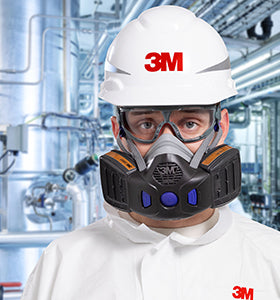

Choosing the right respiratory protection can feel like a bit of a minefield, especially when faced with ratings like TH3, APF 40 and a whole host of technical terms. But don't worry, understanding what these ratings mean doesn't have to be complicated. This guide breaks down the key powered air respirator ratings, helping you understand the differences and choose equipment suited to your workplace hazards.
For more advice on powered air respirators (PAPRs) and choosing the right protection for your workplace, give the Best4Safety team a call. Our experts are happy to help with any questions.
Why Do Powered Air Respirator Ratings Matter?
Powered air respirators (PAPRs) help protect workers from airborne hazards, including dust, fumes and certain gases or vapours. However, different systems offer different levels and types of protection. Understanding their safety ratings helps you compare equipment and assess its suitability for your workplace. This guide explains the key ratings and what they mean for your equipment.
What Is a Powered Air Respirator?
A powered air respirator is a type of respiratory protective equipment (RPE) that uses a battery-powered blower to draw air through a filter before supplying it to the wearer. Unlike conventional filtering masks that rely on the wearer drawing air through the filter when breathing in, a powered air respirator actively moves filtered air to a hood, helmet or facepiece. This can make it a suitable option for certain working environments where respiratory protection, comfort and ease of breathing are important.
What Do TH1, TH2 and TH3 Mean?
TH1, TH2 and TH3 are classifications under EN 12941, the European standard for powered filtering respirators. They indicate the level of inward-leakage performance, or the amount of contaminated air that gets inside a respirator from the surrounding environment.
TH1
The lowest TH classification, allowing up to 10% inward leakage during testing. It may suit lower-exposure tasks where its protection level is sufficient.
Example: Woodworking involving low concentrations of airborne dust, subject to a workplace risk assessment.
TH2
TH2 allows up to 2% inward leakage, offering greater protection than TH1 for tasks requiring a higher level of respiratory protection.
Example: Grinding or finishing processes that generate airborne particles, where the risk assessment requires greater protection.
TH3
The highest TH classification, allowing up to 0.2% inward leakage during testing. It is suitable for applications requiring a higher level of protection.
Example: Certain welding or metal-processing tasks where the assessed exposure requires this level of protection.
Why Do the Classifications Exist?
These classifications exist because different tasks expose workers to different concentrations and types of airborne contaminants. As the potential exposure increases, a higher level of respiratory protection may be needed to reduce the amount of contaminated air reaching the wearer.
However, a higher TH classification is not automatically necessary for every hazardous task. The correct choice depends on the substance, exposure level, required protection factor and compatibility of the complete respirator system. Equipment should always be selected following a suitable workplace risk assessment.
What Does APF 40 Mean?
An Assigned Protection Factor (APF) describes the level of respiratory protection that a type of respiratory protective equipment (RPE) is expected to provide when correctly selected and used in the workplace. An APF of 40 means the equipment is assigned a protection factor of 40 under the relevant conditions of use.
How Is APF 40 Calculated?
The APF can be used to calculate the maximum use concentration of a contaminant, based on its workplace exposure limit (WEL).
For example, if a substance has a WEL of 1 mg/m³ and the selected RPE has an APF of 40, multiplying the two gives a maximum use concentration of 40 mg/m³, subject to the applicable selection requirements and equipment limitations.
When Do I Need APF 40 Equipment?
You need APF 40 equipment when the amount of hazardous material in the air is too high for a respirator with a lower protection factor to reduce your exposure sufficiently.
For example, a worker exposed to high concentrations of hazardous dust or welding fume may need APF 40 equipment if their workplace risk assessment shows that a lower-rated respirator would not provide enough protection.
How to Choose the Right Powered Air Respirator
- Identify the Hazard: Determine whether you're dealing with dust, fumes, mists, gases or vapours.
- Assess the Required Protection: Evaluate exposure levels and use the workplace risk assessment to determine the protection factor needed.
- Select Compatible Equipment: Choose the correct filter, blower and hood, helmet or facepiece for the hazard.
- Check and Maintain the System: Verify airflow, battery charge and component compatibility. Follow the manufacturer's guidance for use, cleaning and filter replacement.
Browse our powered air collection here
Frequently Asked Questions
Is TH3 the Same as APF 40?
No. TH3 is a classification under EN 12941 that measures a powered respirator system's tested performance, while APF 40 is an assigned workplace protection factor. Some TH3 systems can provide an APF of 40 under UK guidance, but this depends on the specific equipment configuration.
What Is the Difference Between TH2 and TH3?
TH2 allows a maximum inward leakage of 2% during standardised testing, while TH3 allows just 0.2%. TH3 therefore offers better inward-leakage performance, but the appropriate classification depends on the level of protection required for the workplace hazard.
Does a Higher APF Mean Better Protection?
A higher Assigned Protection Factor (APF) indicates a greater assigned level of respiratory protection. However, the equipment must still be suitable for the contaminant, exposure level and working conditions. Choosing the highest APF does not automatically make a respirator suitable for every hazard.
Can Powered Air Respirators Protect Against Gases and Vapours?
Yes, some powered air respirators can protect against specific gases and vapours when fitted with the correct compatible filter. However, not all filters provide this protection, so you must identify the contaminant and follow the manufacturer's guidance when selecting equipment.
How Often Should Powered Respirator Filters Be Replaced?
Filter replacement depends on the filter type, contaminant, exposure conditions and manufacturer's instructions. Particle filters and gas filters have different replacement considerations. Always follow the recommended replacement schedule and replace filters when required rather than relying on a fixed timeframe for every application.